Showing posts with label formative assessment. Show all posts

Tuesday, September 8, 2020

Formative Assessment During #RemoteLearning

In an ongoing effort to support Educators during the COVID-19 Pandemic Shaelynn Farnsworth and I continue to look for ways to use research-based instruction during remote, hybrid or face-to-face instruction. This week we look at Formative Assessment, how it works and why it can be a powerful tool no matter what your teaching and learning looks like. 

One of the challenges many educators face during learning is understanding where students are on their path to understanding and how teaching can adjust. Traditionally, teaching has been a one-way enterprise with the teacher dispelling knowledge for a period of time and then assessing what the students know either through a quiz or test. 

Formative assessment changes all that by providing small opportunities throughout a lesson to gauge where students are in their learning and make those subtle adjustments in the moment. There is no doubt this is easier to do when in the classroom face-to-face. Body language can tell you a lot. But also the ability to quickly and easily change instruction is just easier to do when we are are all together. 

However, now we are in the midists of a global pandemic that sees many students learning remotely and the passionate educators who teach them trying to ensure they are doing just that: learning. Formative assessment can be an incredibly powerful tool to use during this time and can become a foundation to change teaching and learning far beyond these unusual times. 

What Is Formative Assessment-There are many ways to describe formative assessment. Simply put, Formative Assessment is taking a pause in learning to ensure students are where they need to be for a particular lesson. The best formative assessments are subtle, giving teachers an overall picture of how students are learning and adapting to their immediate needs. Think of it as a GPS for the teacher—knowing where students are in their learning and where you should head in your teaching.

Formative Assessment could also look like “check-in” questions at the end of a lesson or class, offering valuable information on which direction to head next. Formative Assessments should not be graded assessments. At the end of the day, the goal is to get a pulse on what students know and how effectively the teacher is teaching the material.

But Why Formative Assessment-From the ASCD Book Formative Assessment Strategies for Every Classroom: An ASCD Action Tool, 2nd Edition, Susan Brookhart explains that:

Formative Assessment refers to the ongoing process students and teachers engage in when they:

  • Focus on learning goals.
  • Take stock of where current work is in relation to the goal.
  • Take action to move closer to the goal.

Students and teachers who are engaged in the Formative Assessment process are constantly examining how teaching and learning work as one. If we look at Hattie’s Effect Size, or practices that best move student learning forward, Providing Feedback, Providing Formative Evaluation, and Self-Questioning had anywhere from a 0.64 to 0.68 effect size. What do these results show us? These studies show us that students and teachers who engage in the Formative Assessment process learn and retain more information compared to take-home homework.

Low-Tech Formative Assessment, Remotely- Technology can make the collection of data related to Formative Assessment easier, but it’s not necessary. Especially now that many students are learning from home, it may seem counterintuitive to not lean on technology but technology fatigue is a very real thing and we need to be aware of the low-fi ways to not only continue to engage students but also understand where they are in their learning.

We’ve seen a variety of different low-tech ways to gauge student understanding:

  • Individual Student Check Ins-These can be great not only for formative assessment but also for the social-emotional wellbeing of students as well. 
  • Breakout Rooms-Formative assessment can tell us a lot about what students understand the learning and which do. Now with breakout rooms in Zoom, Teams and Google Hangouts you can not only identify what students are in need but also provide more direct instruction to a smaller group. 
  • Entry/Exit Tickets-Having a simple form that you can have students describe what they learned that day or what learning they are still having trouble with can be a valuable tool in remote learning. 
    • Entry Ticket Ideas
      • Identify 3 points you remember from yesterday’s lesson
      • The thing that has interested me most about this topic so far is__
      • Right now I’m feeling __ about this lesson because I ___
    • Exit Ticket Ideas
      • What 3 points are you taking away from today’s lesson?
      • What are 3 things you are still uncertain about?
      • What are you hoping to learn in our next lesson?

Our Favorite Apps and Tools For Formative Assessment-We’ve talked about how Formative Assessment can be done without tech. However, when we add that layer into our teaching and learning, we can do so much more. Now we can not only provide both synchronous and asynchronous types of formative assessment but we can look at mastery and data over time making it much easier to make those changes to instruction that may be needed. 

There are many (free!) apps and tools out there that achieve this. These are just a few of our favorites:

  • Nearpod— Create lessons and sync them across devices in the classroom, with built in tools for questioning, drawing, audio and video responses.
  • Synth— One of our favorite tools built for Formative Assessment. Available on any device, students can record their thoughts and feelings on any given lesson. There’s also a questions tool where feedback can be posted.
  • EdPuzzle— Add an interactive layer to YouTube videos. Teachers can build in short questions at various points in the video to ensure students are getting what they need out of it. This is also great for data collection and seeing how students’ progress over time.
  • Flipgrid— A very cool way to post video questions and gather responses. Videos can be shared so students can see where their peers are in their learning as well.
  • Padlet—A virtual board for multimodal sticky notes. Great for tickets out the door or reflection activities.

Saturday, September 30, 2017

Everything You Wanted To Know About Formative Assessment But Were Afraid To Ask

Recently Shaelynn Farnsworth and I had a great and engaging discussion on the topic of Formative Assessment for ACER Education. Check out what we had to say.


Some of the highlights:

What Is Formative Assessment—As you can tell from our video, there are many ways to describe formative assessment. Simply put, Formative Assessment is taking a pause in learning to ensure students are where they need to be for a particular lesson. The best formative assessments are subtle, giving teachers an overall picture of how students are learning and adapting to their immediate needs. Think of it as a GPS for the teacher—knowing where students are in their learning and where you should head in your teaching.

Formative Assessment could also look like “check-in” questions at the end of a lesson or class, offering valuable information on which direction to head next. Formative Assessments should not be graded assessments. At the end of the day, the goal is to get a pulse on what students know and how effectively the teacher is teaching the material.

But Why Formative Assessment-From the ASCD Book Formative Assessment Strategies for Every Classroom: An ASCD Action Tool, 2nd Edition, Susan Brookhart explains that:

Formative Assessment refers to the ongoing process students and teachers engage in when they:
● Focus on learning goals.
● Take stock of where current work is in relation to the goal.
● Take action to move closer to the goal.

Students and teachers who are engaged in the Formative Assessment process are constantly examining how teaching and learning work as one If we look at Hattie’s Effect Size, or practices that best move student learning forward, Providing Feedback, Providing Formative Evaluation, and Self-Questioning had anywhere from a 0.64 to 0.68 effect size. What do these results show us? These studies show us that students and teachers who engage in the Formative Assessment process learn and retain more information compared to take-home homework.

Low-Tech Formative Assessment- Technology can make the collection of data related to Formative Assessment easier, but it’s not necessary. We’ve seen a variety of different low-tech ways to gauge student understanding. From dry erase boards where students can write the answer to a question, to sticky notes exercises that can act as an open-forum, Formative Assessment does not require a large investment to make a large impact.

Is There Hardware Designed For Formative Assessment? In fact there is. Shaelynn and I are partnering with ACER Education to take a look at their new TravelMate Spin B118. It’s a dynamic, classroom-specific device that was built with Formative Assessment in mind. It comes with their ACER TeachSmart software that makes use of LED lights built into the lid of the device. This allows the teacher to ask Formative Assessment questions in the middle of a lesson and students can change their lights simply and easily. The lights could stand for anything—ABCD, Yes/No, I’ve got it/I don’t understand.

The TravelMate Spin B118 is also equipped with a digital pen and Windows Ink that allows users to sketch, map, annotate, and draw with the ease of a traditional pen and the magic of digital ink. The visual aspect of this tool is not only beneficial for teachers to model skills to students, but students are able to brainstorm, ideate, and prototype during the design process, making this an invaluable tool in the classroom.

Our Favorite Apps and Tools For Formative Assessment We’ve talked about how Formative Assessment can be done without tech. However, when we add that layer into our teaching and learning, we can do so much more. There are many (free!) apps and tools out there that achieve this.

Nearpod— Create lessons and sync them across devices in the classroom, with built in tools for questioning, drawing, audio and video responses.
RecapApp— One of our favorite tools built for Formative Assessment. Available on any device, students can record their thoughts and feelings on any given lesson. There’s also a questions tool where feedback can be posted.
EdPuzzle— Add an interactive layer to YouTube videos. Teachers can build in short questions at various points in the video to ensure students are getting what they need out of it. This is also great for data collection and seeing how students’ progress over time.
Flipgrid— A very cool way to post video questions and gather responses. Videos can be shared so students can see where their peers are in their learning as well.
Padlet—A virtual board for multimodal sticky notes. Great for tickets out the door or reflection activities.


Friday, July 21, 2017

Summer 2017 Learning Series-Embracing Formative Assessment

For the next several weeks I’ll be sharing posts that you can use for your summer learning. School may be out for many but the learning we do as educators can last even outside the classroom. These posts will take us through Twitter chats and how you can participate in real time or whenever you want. Next we will examine some ideas on how to get the most out of any conference you attend this summer or beyond. We will then move to some non-educational books that you can use to grow as a learner and a professional. From there we will look at Formative Assessment and how easy it is to do today. Then I’ll give you some ideas on how to better engage parents this upcoming school year. Finally we will finish the series by looking at some new and exciting tools to try in your classroom. Each post will offer up some basic information along with several learning challenges you can undertake. Happy Learning!

This post was written in partnership with Acer Education. 

For me, the beginning of the school year was the best time of year. I always enjoyed getting back into my classroom, setting things up and getting pumped for the journey ahead with my students. The beginning of the year was a good reset. I could reflect back on the previous year, examine what I had learned over the summer and plan for a better year coming up.

One area of improvement still to this day I wish I could go back and improve even more was assessment. Mainly, embracing formative assessment.

In my first year of teaching I taught the way I was taught to teach. Delivering content to my students, assess at the end, remediate if necessary. With that cycle, I always had kids who were behind, who never seemed like they could catch up.

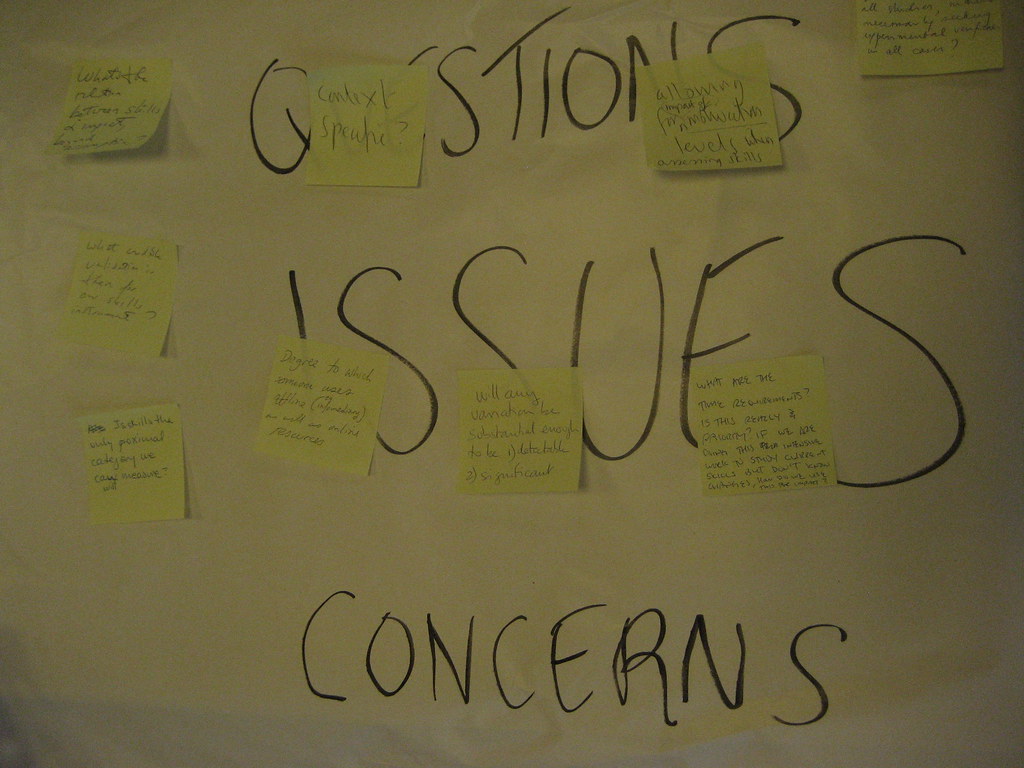
I was talking with a teacher friend the summer after my first year and she suggested something simple. Put a large piece of paper next to the door. Give every student a pack of sticky notes. On the way out the door they could put their thoughts about what they didn't quite get or what they were still having trouble with. They could leave their name or not. Either way it gave valuable insight to how the students were learning but also could help shape the lesson for the next day.

What a difference that made.

The following school years that board became an important place for myself and my students. It provided them a way to tell me what they needed and a place for me to reflect on my teaching and give my students what they needed.

Now, as 1:1 and Bring Your Own Device (BYOD) are taking over our schools, it's becoming even easier to formatively assess what our students know and for our students to leave feedback as to what they need because of this ready access to technology. This evolution should (and is) cause a shift for all teachers to look to formative assessment as the basis for understanding where students are in their learning.

Here are a few of my favorite devices, apps and sites that can help you more easily fit formative assessment into your classroom this school year.

Acer TravelMate B117-If you are looking at an inexpensive, purpose device that can also help with formative assessment then look no further. The Acer TravelMate is a durable student laptop that does what you expect but also has some cool features. One of the best is the incorporation of multicolored lights built into the lid that allow for the teacher to send a quick question to students and they can respond with these lights, simply and easily. Software is also included so both students and teachers can track their progress over time. Like these other tools, it allows for quick feedback to the teacher on understanding but I don't need anything extra like a different website or cards to hold up. The TravelMate 117B does it all for me!

Online Sticky Notes- Just like the physical space in my classroom there are lots of virtual sticky note sites out there. Two of my favorites are Padlet and Lino. These provide a virtual corkboard for students to leave notes or questions or comments on their learning. Both sites are easy to set up and free. Best part, kids don't have to have an account to leave a note and they can do it any time, anywhere. All they need is the address. (So you don't even have to be a 1:1 classroom or BYOD. The kids could do them from home.)

Backchannels- Hugely popular at conferences and other educational gatherings the backchannel provides a way for participants to share in conversation while participating in learning. In the classroom they can be a way for kids to collaborate without shouting across the room. In terms of formative assessments, questions at various points through the lesson could be posted there and kids could respond. My favorite backchannel service is TodaysMeet. Again, simple to set up (all you need is a room name and to decide how long you want the room to be open). Free as well, it's available any time, anywhere.

Plickers- A tech tool for the non-tech classroom students merely need to hold up a card with a QR code on it. Using the free Plickers app, teachers then scan the room. The app reads the QR codes. The way the student is holding the card corresponds to an answer choice or letter or whatever you want that end to represent. Once the teacher scans the room you can see instantly who answered what and respond accordingly. It's a quick and easy way to use the power of technology to formatively assess without all students needing the technology.

Kahoot- Kids love friendly competition. And Kahoot is a formative assessment tool cleverly disguised as a game. Simply enter questions into an easy to use template and then students, either as individuals or as teams can see who can gather the most points by answering the questions as fast as they can. For the teacher there are dashboards that show who answered what and that, along with the instant feedback when the questioned is answered can be a great way to introduce and use formative assessment.

Poll Everywhere- This is another one of my favorites, simply because of the variety of uses and methods of submitting responses. Similar to the others, the teacher can create a simple feedback poll or leave the question open ended. The students can respond via text message, website or even Twitter. Again, the point here is we can capture the feedback from the students using a variety of methods, almost instantly. Another great feature of Poll Everywhere is the data analysis you get. You can export results to create more ways of analyzing data. (Like if the questions are open ended, you could export the results to put them into a Wordle to see what terms are showing up the most.)

Socrative- This one is quickly become a go-to app for formative assessments for educators everywhere. The teacher creates an account and a room (for, you guessed it, free). Then the students go to the site (either through the app or through a browser), enter the room number and they see a question or a open response question to answer. I like this one a lot because of the variety of choices for questions to answer. One is even called Exit Ticket where kids can quickly summarize what they learned and tell you what they need for tomorrow.

Eight different tools that are quick and easy you can use this school year in your classroom to help improve formative assessment.

Saturday, March 11, 2017

3 Ways To Combat Recipe Learning

When I was a middle school science teacher I regularly assigned projects. At the time I thought that the projects would be a great way for me to understand what my students understood about particular concepts and topics. I had them make visual representations of atoms of the periodic table, reports outlining the effects of global warming on our community, and several others. We would regularly complete labs in class and then I would have them report their findings to present, just as scientists do.

The way I learned how to assign these projects what was from my teacher preparation program. Through trial and error I learned how to give these projects and grade them effectively for understanding. Rubrics were all the rage so I thought that by giving all the same project and using the rubric I was differentiating for my students because they got to decide where they fit on the rubric. What I didn’t know at the time was I was expecting all the same level of work.

I hadn’t designed an effective summative assessment.

I had assigned a recipe.

I enjoy to cook and spend a lot of time doing it when I’m not traveling. Recipes help me complete complex tasks that, I hope, in the end help my dishes look as great as the pictures on the recipe card. If you’ve ever watched a competition cooking show they give the contestants recipes to follow and then judge them how well they match up against their expectations.

Isn’t that what I was doing in my classroom?

Sure. I was giving them a project, telling them all my expectations for what to produce, and of course every kid needed to produce the same thing because that made it easier for me to grade. And, I thought it would easily show me what they had learned. In the end I got 30 of the same element, 30 of the same reports and 30 of the same presentations. What I thought was good for my students actually wasn’t. I had given them a recipe and they had followed but were they really able to tell me what they’d learned? Was I letting them be creative in the process, thereby giving them a reason to invest in their learning?

Certainly not.

We’ve all been guilty of the recipe approach. Either as an unwilling participant or a willing assigner of these types of assignments and projects. The push back I get is, yeah but kids want recipes. They want to be told the expectations. They want to have the guidelines. That may be only slightly true. If I were to sit down with a group of students and give them 2 options, one to produce a highly scripted, outlined project, or one where the expectations are set out but they get to decide what they want to produce, I’d be willing to bet they’d pick the freedom to create whatever they want every time. All they know in school is the scripted approach. So they’ve come to rely on it. We have to help break free of that mantra and allow creativity and innovation into the work students do.

3 Ways To Combat Recipes Learning

Choice In Content, Process and/or Product- Allowing students to discover their own paths to content and process and products helps invest them in their learning. While content may be set by standards or expected outcomes, students can get creative in how they learn that content, the methods by which they connect that content to already known knowledge and especially in how they demonstrate their understanding.

Choice can also come from the types of technologies student use. There are all sorts of ways from students using tablets to create videos and audio podcasts, to building or replicating historical events in Minecraft, to using drawing and spreadsheet tools to create infographics. Any of these can be choices that students make to discover content in a new way, tools that they use to make a better understanding of their learning or how they can produce a result to demonstrate their learning.

There are all sorts of ways for students to show off their creativity by fostering choice with content, process and product.

Move To Problem Based Learning- You are a member of a team tasked with investigating the impact of the removal of a local park in favor of building a new high school football stadium. The high school has never had a stadium and really wants one. But the neighborhood uses the park daily and it would be a great loss to the community. There is also a stream that runs through the park that would be impacted. The task is to present a recommendation to the Mayor as to what should be done.

To move past the boring recipe type projects and expected outcomes, look to Problem Based Learning. PBL gives real-world problems for students to solve. The example above is one from a school in my district that was an actual problem faced by the students and the surrounding community. For the entire school year the school worked on the problem in all the classes, tied to curriculum and standards. At the end of the year many student teams presented their findings to the Mayor. The solutions they came up with were vast, but none the same. Each team was able to show off their creativity and innovative ideas to solve the problem.

As we know many problems have multiple solutions. So the scripted approach to what students will produce won’t really work here. Students, utilizing choice, can investigate, research, hypothesize, test and report on how they would solve the problem. The Buck Institute for Education is the go-to for anything PBL. Check out their resource section for example problems, assessment ideas and project guides.

Embrace Formative Assessment- Formative assessments are short and quick assessments that are given at the moment of learning. They can be a simple temperature check, having students explain their learning in their own words, or something more detailed, such as having them answer a few math problems or complete a task related to learning. The key is they are done at the moment of learning. They don’t wait for all the learning to be complete and then are given. Summative assessments, like the test at the end of the chapter or the recipe final project given at the end of the year, do serve their purpose if used effectively but formative assessments can help drive teaching and learning.

If the end goal of the recipe project is to see what students have learned and for them to demonstrate that learning, why wait until the end of the learning? By asking pointed and simple questions throughout the learning process teachers and students have a greater understanding of both how effective the teaching is and how the learning is progressing. Then there is little need for that scripted, recipe project and more time can be taken for deeper understanding and differentiation. Formative assessments come in all forms. Check out this post I wrote recently about them and how they can be used and different ways technology can help.


Download The Post Image: https://spark.adobe.com/post/JTxxhdZZHOiGK/

Tuesday, August 2, 2016

Embracing Formative Assessments This School Year

For me, the beginning of the school year was the best time of year. I always enjoyed getting back into my classroom, setting things up and getting pumped for the journey ahead with my students. The beginning of the year was a good reset. I could reflect back on the previous year, examine what I had learned over the summer and plan for a better year coming up.

One area of improvement still to this day I wish I could go back and improve even more was assessment. Mainly, embracing formative assessment.

In my first year of teaching I taught the way I was taught to teach. Delivering content to my students, assess at the end, remediate if necessary. With that cycle, I always had kids who were behind, who never seemed like they could catch up.

I was talking with a teacher friend the summer after my first year and she suggested something simple. Put a large piece of paper next to the door. Give every student a pack of sticky notes. On the way out the door they could put their thoughts about what they didn't quite get or what they were still having trouble with. They could leave their name or not. Either way it gave valuable insight to how the students were learning but also could help shape the lesson for the next day.

What a difference that made.

The following school years that board became an important place for myself and my students. It provided them a way to tell me what they needed and a place for me to reflect on my teaching and give my students what they needed.

Now, as 1:1 and Bring Your Own Device (BYOD) are taking over our schools, it's becoming even easier to formatively assess what our students know and for our students to leave feedback as to what they need because of this ready access to technology. However, look at my former classroom. I was able to embrace formative assessment without the need for any devices. The technology certainly helps but isn't always necessary.

Here are a few of my favorite sites and apps that can help you more easily fit formative assessment into your classroom this school year.

Online Sticky Notes- Just like the physical space in my classroom there are lots of virtual sticky note sites out there. Two of my favorites are Padlet and Lino. These provide a virtual corkboard for students to leave notes or questions or comments on their learning. Both sites are easy to set up and free. Best part, kids don't have to have an account to leave a note and they can do it any time, anywhere. All they need is the address. (So you don't even have to be a 1:1 classroom or BYOD. The kids could do them from home.)

Backchannels- Hugely popular at conferences and other educational gatherings the backchannel provides a way for participants to share in conversation while participating in learning. In the classroom they can be a way for kids to collaborate without shouting across the room. In terms of formative assessments, questions at various points through the lesson could be posted there and kids could respond. My favorite backchannel service is TodaysMeet. Again, simple to set up (all you need is a room name and to decide how long you want the room to be open). Free as well, it's available any time, anywhere.

Plickers- A tech tool for the non-tech classroom students merely need to hold up a card with a QR code on it. Using the free Plickers app, teachers then scan the room. The app reads the QR codes. The way the student is holding the card corresponds to an answer choice or letter or whatever you want that end to represent. Once the teacher scans the room you can see instantly who answered what and respond accordingly. It's a quick and easy way to use the power of technology to formatively assess without all students needing the technology.

Kahoot- Kids love friendly competition. And Kahoot is a formative assessment tool cleverly disguised as a game. Simply enter questions into an easy to use template and then students, either as individuals or as teams can see who can gather the most points by answering the questions as fast as they can. For the teacher there are dashboards that show who answered what and that, along with the instant feedback when the questioned is answered can be a great way to introduce and use formative assessment.

Poll Everywhere- This is another one of my favorites, simply because of the variety of uses and methods of submitting responses. Similar to the others, the teacher can create a simple feedback poll or leave the question open ended. The students can respond via text message, website or even Twitter. Again, the point here is we can capture the feedback from the students using a variety of methods, almost instantly. Another great feature of Poll Everywhere is the data analysis you get. You can export results to create more ways of analyzing data. (Like if the questions are open ended, you could export the results to put them into a Wordle to see what terms are showing up the most.)

Socrative- This one is quickly become a go-to app for formative assessments for educators everywhere. The teacher creates an account and a room (for, you guessed it, free). Then the students go to the site (either through the app or through a browser), enter the room number and they see a question or a open response question to answer. I like this one a lot because of the variety of choices for questions to answer. One is even called Exit Ticket where kids can quickly summarize what they learned and tell you what they need for tomorrow.

Quick and easy, six tools you can use this school year in your classroom to help improve formative assessment.

These certainly aren't all. What are some of your favorite sites or apps to help with formative assessment in your classroom? Do you have a suggestion about formative assessments? Leave some feedback below.

photo credit: GettyImages-Examen via photopin (license)

Wednesday, June 4, 2014

Why Formative Assessments Matter

Back in my first year, I was teaching a unit on the parts of the Periodic Table. The students needed to know where they could identify elements that were typically metals, non-metals, gases and be able to identify elements based on their Atomic number among other tasks. At the time, I believed I was doing exactly what my standards said I had to. My students needed to know the organizational structure of the Periodic Table and by golly they were gonna know. 

So for a week, I stood in the front of the room while students furiously wrote down every word that came out of my mouth. Atomic number, Lanthanide Series, electrons. I could see at the end of each day confusion on their face but I chalked that up to their needing to go home and review their notes so they would "get it." No need for me to change what I was doing. They needed to catch up. 

At the end of the week was the big assessment. I was pretty proud of myself. I had imparted all sorts of Periodic Table knowledge on my students and now we were going to see them shine with it came time to recall all that information. That weekend I got the biggest wakeup call of my, then brief, educational career. Most could not recall a single thing. Some got an answer here or there but for the most part, there were no bright spots from this assessment. 

After the anger at my students subsided, I looked inward. What could I have done differently? There had to be a better way than letting my students get all the way to the end of a unit of study to have them not know anything. 

Formative assessments changed my classroom. 

That look of confusion on my students faces was a clear sign I needed to step back and look at what I was doing and how I was teaching. Had I used some kind of formative assessment I wouldn't have needed the summative at end, nor would my students have gotten to the point of utter confusion. 

Formative assessments are simply little gauges or indicators of how students are progressing towards a learning goal. It could be anything from a simple conversation to something like a clickers or response via a website. It is the formative assessments throughout learning that give us the indication we are headed down the right path with our learning or whether we should take a right turn to get back on track. The use of the formative assessments help teachers understand where their students are and, more importantly, where their teaching is. Had I used formative assessments, I would not have had to take another week breaking things down with the Periodic Table. I could made my adjustments along the way. 

How can you use formative assessments today? Simple!

1) Ticket out the door-One of the first things I did was put sticky notes on every student's desk. at the end of class they had a chance to summarize what we did that day and ask any questions they wanted. They could put their name on it or could remain anonymous. Either way I had a good indication of whether my students got it or didn't. And I could make those on-the-fly adjustments for the next class or for the next day. Now we have virtual sticky notes like on Wallwisher and LinoIt that make this process that much easier. 

2) Real-Time Feedback- I can make those on-the-fly changes by using a real-time feedback program like UnderstoodIt. By having students simply answer "Understand" or "Confused" at various times of class, you gain that valuable feedback needed to make changes to the learning. You don't have to wait until tomorrow. And you can better understand the learning needs of your students to customize the learning environment to them. 

3) Building It In- There are loads of services and sites out there do polling, quizzing or response. Utilizing these can help in the formative assessment process by building in those natural places to stop and reflect on how the learning is going and how it might need to be improved. Again, if I can make those adjustments as I go, I can catch things before they go off the rails. 

Whether you use something at the end of class or during or both, formative assessments can change your understanding of your students and yourself. After our disaster unit on the Periodic Table, I used formative assessments in my classroom everyday and never again did we have a repeat of that week. Over time the students felt comfortable enough to tell me when they really didn't like the learning style I was using or that they enjoyed a particular way I presented the content. I had a better grasp on the learning my students were doing and they had a better grasp on the content. It was a definite win-win. 

How have you used formative assessments? Leave some insight below. 

photo credit: Benjamin Chun via photopin cc

Monday, January 21, 2013

Formative Assessments Are Easier Than You Think!

When I was teaching science one of the best lessons I learned was about formative assessment.

In my first year of teaching I taught the way I was told to teach. Deliver content to my students, assess at the end, remediate if necessary. With that cycle, I always had kids who were behind, who never seemed like they could catch up.

I was talking with a teacher friend the summer after my first year and she suggested something simple. Put a large piece of paper next to the door. Give every student a pack of sticky notes. On the way out the door they could put their thoughts about what they didn't quite get or what they were still having trouble with. They could leave their name or not. Either way it gave valuable insight to how the students were learning but also could help shape the lesson for the next day.

What a difference that made.

The following school years that board became an important place for myself and my students. It provided them a way to tell me what they needed and a place for me to reflect on my teaching and give my students what they needed.

Now, as 1:1 and Bring Your Own Device (BYOD) are taking over our schools, its becoming even easier to formatively assess what our students know and for our students to leave feedback as to what they need.

Here are a few sites and apps to help with formative assessments...

Online Sticky Notes-Just like my physical space in my classroom there are lots of virtual sticky note sites out there. Two of my favorites are Wallwisher and Lino. These provide a virtual corkboard for students to leave notes of questions or comments on their learning. They are easy to set up and free. Best part, kids don't have to have an account to leave a note and they can do it any time, anywhere. All they need is the address. (So you don't even have to be a 1:1 classroom or BYOD. The kids could do them from home.)

Backchannels-Hugely popular at conferences and other educational gathering the backchannel provides a way for participants to share in conversation while participating in learning. In the classroom they can be a way for kids to collaborate without shouting across the room. In terms of formative assessments, questions at various points through the lesson could be posted there and kids could respond. My favorite backchannel service is TodaysMeet. Again, simple to set up (all you need is a room name and to decide how long you want the room to be open). Free as well, its available any time, anywhere.

Understood It-A new-to-me service, this one is elegantly simple. The teacher creates an account (for free, 5 questions per month) and gives the students a unique address. Then during the lesson the kids can hit a button to show they understand it or they are confused. The teacher can see the results in real time. The more kids who are confused, the higher the graph. Instant feedback that the teacher can use to change the scope of the lesson.

Poll Everywhere- Another one of my favorites, simply because of the variety of uses and methods of submitting responses. Similar to the others, the teacher can create a simple feedback poll or leave the question open ended. The students can respond via text message, website or even Twitter. Again, the point here is we can capture the feedback from the students using a variety of methods, almost instantly. Another great feature of Poll Everywhere is the data analysis you get. You can export results to create more ways of analyzing data. (Like if the questions are open ended, you could export the results to put them into a Wordle to see what terms are showing up the most.)

Socrative- This one is quickly become a go-to app for formative assessments for me. The teacher creates an account and a room (for, you guessed it, free). Then the students go to the site (either through the app or through a browser), enter the room number and they see a question or a open response question to answer. I like this one a lot because of the variety of choices for questions to answer. One is even called Exit Ticket where kids can quickly summarize what they learned and tell you what they need for tomorrow.

Quick and easy, five tools you can use tomorrow in your classroom to help improve formative assessment.

These certainly aren't all. What are some of your favorite sites or apps to help with formative assessment in your classroom? Do you have a suggestion about formative assessments? Leave some feedback below.


photo credit: Technology & Social Change via photopin cc